August 29, 2026
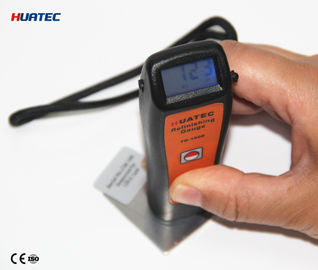
In precision manufacturing and metal processing, coating thickness serves as a critical parameter that determines not only product aesthetics but also corrosion resistance, wear performance, and service life. The UNI-T UT343A coating thickness gauge emerges as an essential solution for quality control, delivering exceptional measurement accuracy and operational efficiency across diverse industrial applications.
The UT343A employs advanced electromagnetic induction and eddy current dual-measurement technology, automatically distinguishing between ferrous (magnetic metals) and non-ferrous substrates. With an extensive measurement range of up to 1750μm, the device accommodates various industrial coatings including automotive paints, anti-corrosion layers, and metal surface treatments. Its ±(3%H+1)μm high precision ensures reliable quantitative data for rigorous quality assurance processes.
Engineered for demanding work conditions, the UT343A features a compact 111g body with optimized ergonomics. The instrument's portability makes it suitable for both noisy production floors and outdoor construction sites. An EBTN high-definition display maintains readability in low-light environments, while the rotatable screen enhances usability in confined spaces or unusual measurement angles.
The gauge incorporates multiple intelligent functions to streamline workflow:
Certified to CE and UKCA international standards, the UT343A ensures long-term operational safety and durability. Practical features include instant μm/mil unit conversion, low-battery indication, and auto-power-off functionality. The included calibration substrates for both ferrous and non-ferrous materials enable field calibration, maintaining measurement accuracy throughout the instrument's service life.
As a comprehensive quality control solution, the UT343A combines precision sensing, user-centric design, and industrial durability. This integration provides manufacturing professionals with an efficient and reliable system for coating thickness verification, ultimately supporting higher production standards and reduced rework costs.