October 12, 2026
When an aircraft's landing gear touches down at high speed, or when a heavily loaded train rushes across railroad tracks, microscopic metal fatigue cracks hidden beneath the surface often become invisible killers. How can these structural defects be accurately detected without disassembly or damage to components? Eddy Current Testing (ECT) technology holds the key to solving this industrial challenge.
Eddy current testing operates based on electromagnetic induction. When an alternating current passes through a detection coil near conductive materials, the resulting alternating magnetic field induces closed-loop currents called "eddy currents" on the material's surface. If cracks, pores, inclusions, or other discontinuities exist on or near the surface, the eddy current flow path becomes disrupted, causing changes in the coil's impedance. Detection instruments capture these variations in impedance amplitude and phase, converting them into visual signals for precise defect localization, characterization, and quantitative assessment.
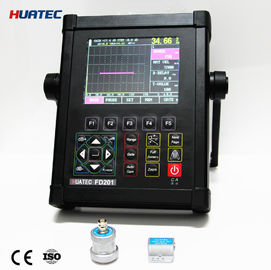
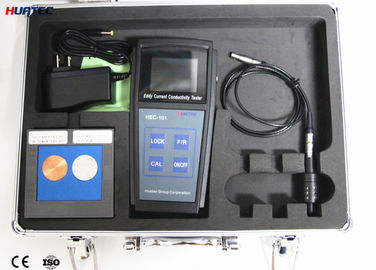
Modern ECT equipment is evolving toward integration and modularity. From portable handheld devices (e.g., Eddycon series) to integrated industrial production line systems, users can configure multi-channel probes (single channels supporting up to 32 probes) according to inspection needs. These systems are compatible with various terminal devices including laptops, tablets, and industrial PCs, supporting real-time data analysis and storage to provide robust data support for industrial preventive maintenance.
In summary, eddy current testing technology has become an indispensable component of modern industrial quality control systems due to its high sensitivity, speed, and non-destructive characteristics. As sensor technology and signal processing algorithms advance, its application prospects in complex geometric component detection and automated industrial environments will continue to expand.